

Taufiq Ahmad
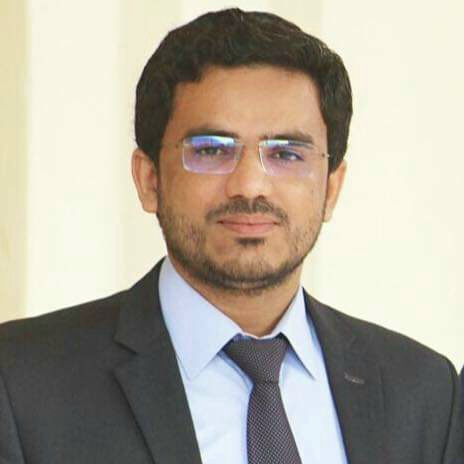
Graduate Student, Communication
Education
M.A., Journalism, Ohio University
Research Expertise
Digital Media
Media Studies
Strategic Communication
Taufiq joined Department of Communication as a PhD Student at the University of Maryland. His research interest lies in digital media, strategic communication, and civic engagement. Within the online sphere, he specifically focuses on digital discourses, narrative persuasion, public engagement, online participation and the issues of mis/disinformation.
Taufiq holds an MS in journalism from Ohio University. He has diverse background in teaching and research. He also teaches Oral Communication (COMM 107) at the University of Maryland.
Publications
How AI induces professional identity threats: A survey study with public relations professionals
Co-Authored work in Public Relations Review
Author/Lead: Yan QuContributor(s): Taufiq Ahmad
The transformative force of AI is largely redefining how public relations professionals approach their work, understand their responsibilities, and make sense of the meaning and value associated with being a PR practitioner. While research in other disciplines have increasingly recognized the implications of AI toward professional identities, this topic remains underexplored in the public relations field. Through a quantitative survey (N = 285), we assessed how PR practitioners experience professional identity threats across five dimensions: expertise, status position, autonomy, professional influence, and job responsibility. Our findings highlight that these perceived threats are associated with a combination of factors, including AI use patterns, attitudes and assessment of AI, and influences from leaders and peers. Overall, this study contributes to ongoing conversations about the impact of AI toward the future of public relations through a novel perspective exploring PR professional identities. It also offers practical insights for leaders and organizations on strategies to support PR practitioners in successfully navigating the AI-driven public relations landscape.
Advancing theory in social media-mediated crisis communication research in China: A mixed-method review
Research published in Public Relations Review
Author/Lead: Taufiq AhmadSocial media is an indispensable component of strategic communication and public life in China, positioning it as a central arena for crisis communication research. As social-mediated crisis communication (SMCC) scholarship expands, questions arise not only about what has been studied, but how methodological choices shape theory development. This study conducts a mixed-method review of 105 articles published between 2009 and 2025 in 15 SSCI-indexed journals spanning communication, public relations, risk and crisis management, and new media studies. By integrating manual coding, structural topic modeling (STM), and network analysis, the study demonstrates how mixed-method computational reviews can function as a theory-building device. Rather than cataloging topics, this approach maps the alignment between research topics, theoretical frameworks, and contextual dimensions, revealing under-theorized areas and methodological lock-ins. It identifies 13 research topics, highlights government-focused research as central, notes uneven use of framing theory and SCCT, and recognizes economic factors as an emerging contextual dimension. Overall, this study not only contributes methodological and theoretical insights to crisis communication scholarship by foregrounding China’s distinctive digital, institutional, and sociopolitical environment but also illuminates the theoretical and thematic blind spots generated by Western-influenced research agendas in engaging with the complex realities of non-Western societies.
Artificial intelligence, deepfakes, and wars: How global news media frame actors, threats, and solutions in 19 countries
Collaborative research from the COMM department published in Media, War & Conflict
Author/Lead: Taufiq Ahmad, Seyeon ParkThis study analyzes 308 news articles published by 19 newspapers across 19 countries to examine the actors behind deepfakes, the associated threats, and the proposed solutions. Using the Russia–Ukraine war as a case study, the authors examined how newspapers frame deepfake-related actors, threats, and solutions during the conflict. Qualitative thematic analysis was used to analyze the data, and framing theory to interpret the findings. Findings reveal that the actors responsible for creating, distributing, and supporting deepfakes include state and political entities, technology companies and developers, criminal networks, covert channels, and propaganda agents. The threats posed by deepfakes span political, ethical, legal, social, security, and economic domains. Proposed solutions to counter deepfakes fall into several categories: technical, policy-based, regulatory, institutional, and educational. This research contributes to the growing body of literature on modern warfare, AI-generated disinformation, deepfakes, and the rapidly changing digital information ecosystem in the post-truth era.
Factors influencing international students’ adoption of generative artificial intelligence: The mediating role of perceived values and attitudes
Research on international students and AI
Author/Lead: Taufiq AhmadThe present study examines the factors influencing international students’ intentions to use generative artificial intelligence (GenAI). Our results showed that attitude toward GenAI use, perceived ease of use, perceived usefulness, enjoyment, subjective norms, novelty, trust in technology, perceived value, and AI literacy were positively associated with intention to use GenAI. Fear of plagiarism had a negative relationship with intention to use GenAI. Our mediation analysis suggested that trust in technology, perceived ease of use, fear of plagiarism, perceived usefulness, and AI literacy indirectly influenced GenAI usage intention via attitude and perceived value, underscoring both the appeal and concerns of GenAI in learning. This study contributed to the TPB, VAM, and TAM frameworks by incorporating fear of plagiarism, trust in technology, and AI literacy to demonstrate how cognitive, affective, and value-based factors collectively influence the adoption of GenAI technologies among international students.
Global news media coverage of artificial intelligence (AI): A comparative analysis of frames, sentiments, and trends across 12 countries
New study on global news media coverage of AI
Author/Lead: Taufiq AhmadThis study examined the coverage of artificial intelligence (AI) in newspapers from 12 countries by analyzing news articles (N = 38,787) collected from 12 mainstream English newspapers, between 2010 and 2023. We used LDA topic modeling to identify prevalent frames in the news articles and SentiStrength to examine sentiments in the news headlines. Framing theory was applied in interpreting our results. Our analysis identified nine frames across newspapers: AI impacts on businesses, economy, and jobs (37.40 %), AI transformations in education and research (17.70 %), AI in national security and global partnerships (11.20 %), AI disruptions in media and creative industries (9.6 %), AI-based innovative solutions (7.30 %), AI regulations, ethics, and data privacy (6.40 %), AI competition and market dynamics in tech industries (4.90 %), AI in healthcare and climate change (3.47 %), and AI in politics, elections, and public opinion (2.03 %). A comparative analysis suggested that the Global North newspapers gave relatively lower coverage to AI-based innovative solutions and AI in healthcare and climate change while AI regulations, ethics, and data privacy and AI disruptions in media and creative industries received minimal coverage from the Global South newspapers. Our overall sentiment analysis indicated that 21.04 % of news headlines evoked negative, 13.33 % positive, and 65.63 % neutral sentiments. The Global North newspapers such as The Guardian and The NYT framed AI negatively in the 24 % of their news headlines, while the Global South newspapers such as China Daily and Bangkok Post framed AI positively in the 14.5 % of their news headlines.
Highlighting Heroes and Ignoring Villains: Visual Framing of Polio and Polio Vaccine in Newspapers
Overall, this study contributes to the fields of visual communication, health communication, and international communication, particularly related to the Global South.
Author/Lead: Taufiq AhmadPolio vaccine hesitancy remains high in Pakistan due to various socio-political, religious, and economic factors. To address this, the government of Pakistan and its international partners such as UNICEF have devised a multipronged communication strategy to counter resistance to polio vaccine in hard-to-reach areas of the country. In this strategy, mainstream news media has been identified as a key stakeholder, as they have the potential to reach a wide range of population and disseminate easy to understand messages including both visuals and text. However, less scholarly attention has been paid to how mainstream news media in Pakistan frame polio and polio vaccine in their visuals. This study aims to fill this gap. Using visual framing as a theoretical framework, we analyzed 115 images from three selected newspapers published from 2010 to 2022. Our results suggest that the newspapers depicted hard-to-reach areas in Khyber Pakhtunkhwa (KP) province which were more affected by polio and highlighted the criminality and securitization of polio vaccine in the country. In addition, female polio healthcare workers, who are instrumental in eradicating the disease, have been given marginal coverage, reflecting the importance of gender sensitivity in the region. Overall, this study contributes to the fields of visual communication, health communication, and international communication, particularly related to the Global South.