

Lahne Mattas-Curry
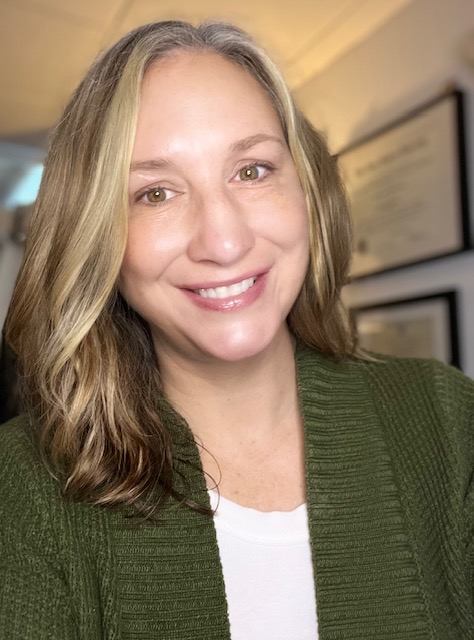
Steering Committee Member, Center for Health and Risk Communication
Education
M.A., Marketing, Johns Hopkins University
Ph.D., Communication, University of Maryland
Research Expertise
Crisis & Risk Communication
Public Relations
Lahne Mattas-Curry earned her Ph.D. in Communication (Public Relations and Strategic Communication track) from the University of Maryland. She is Research and Communication Faculty at UMD's School of Public Health and serves on the Steering Committee for the Center for Health and Risk Communication.
Publications
Frontline Voices of care: How community health workers cultivate relationships
Many UMD COMMunity members collaborate on this new publication for Public Relations Review
Author/Lead: Brooke Fisher LiuContributor(s): Lahne Mattas-Curry, Anita Atwell Seate, Carina Zelaya
The importance of communities is central to public relations theory, which has recently received renewed scholarly attention. The COVID-19 pandemic put in sharp focus the importance of community – and the detrimental consequences for society when community life is disrupted. This study combines theorizing on communities and the care-based relationship cultivation model to investigate public relations in a non-traditional setting. We conducted 41 interviews with community health workers (CHWs) engaged with Latino communities during and after the pandemic. Our findings uncover a variety of strategies CHWs employ to sustain community relationships, culminating in the new care-based community cultivation framework. To support community involvement, CHWs communicate their competency, are part of the communities they serve, and meet people where they are. To support community nurturing, CHWs actively listen, communicate with empathy, and educate while working from the heart. They also serve as safe harbors, acknowledge their role limitations, build trust through sustained relationships, and overcome challenges while respecting culture. To support community organizing, CHWs make service connections while acknowledging system limitations and tailor official health guidance. Additionally, CHWs work to overcome obstacles to community members’ well-being. Ultimately, we echo calls for more public relations scholarship to uplift marginalized communities, especially during crises, so that our work supports community well-being and safety.
Read More about Frontline Voices of care: How community health workers cultivate relationships